
Repeating Patterns
As we work through our laundry list of projects we want to do this summer, one thing has repetitively 😉 come up time after time - is there a faster way to make repeating patterns on material? The answer to that usually comes down to what type of material you are using, the machines you have available to you, and the kind of pattern you are looking to transfer.
Currently we are working through a quilting pattern (and unfortunately don’t have access to a long-arm quilting machine). While it is a fairly simple straight line quilting pattern, it still takes an awfully long time to just draw on fabric with a ruler and chalk. And, the pattern wasn’t always accurate since we were just using ruler measurements from one square to the next. For this particular problem we identified 3 options to speed up the process, which we have pros and cons on for each one.
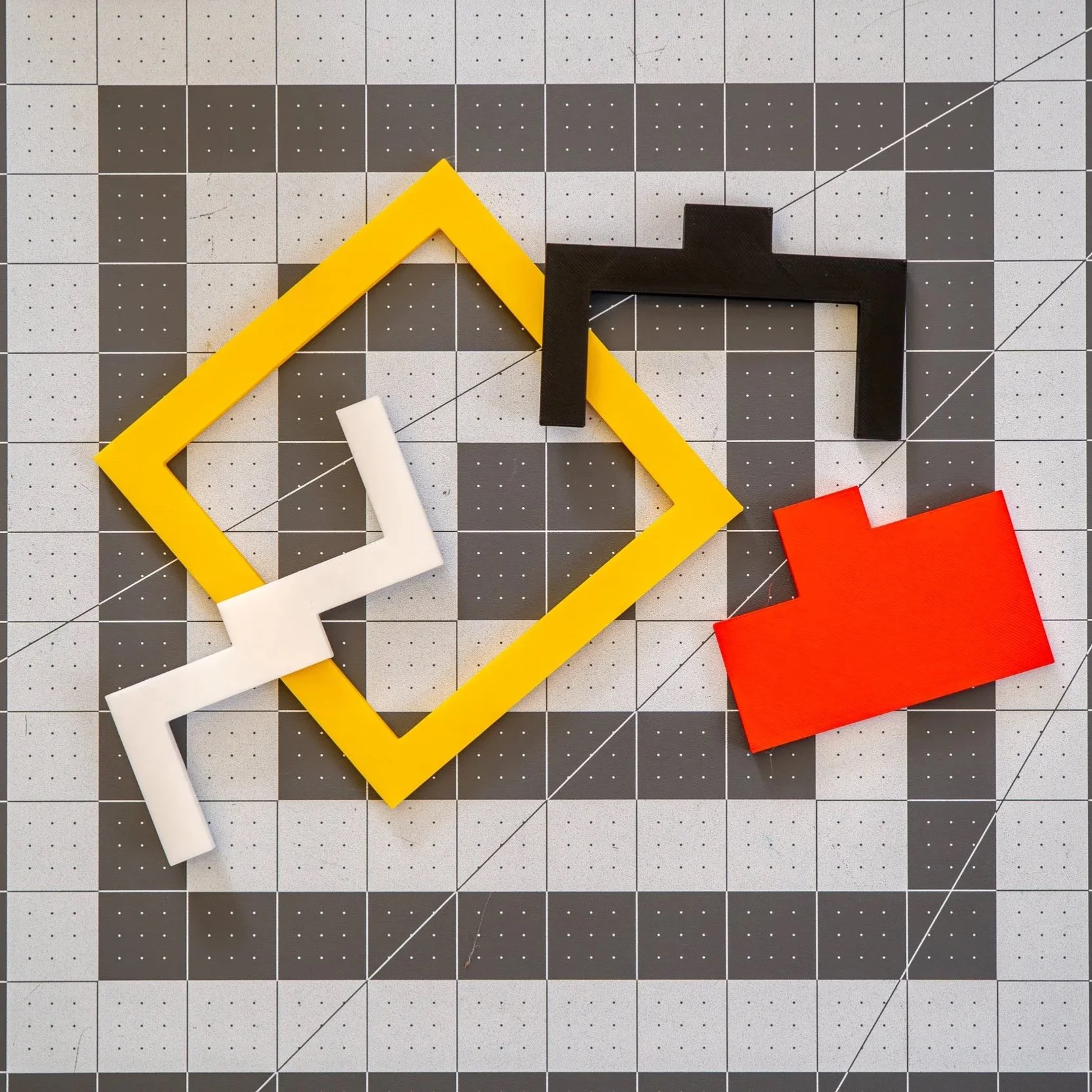
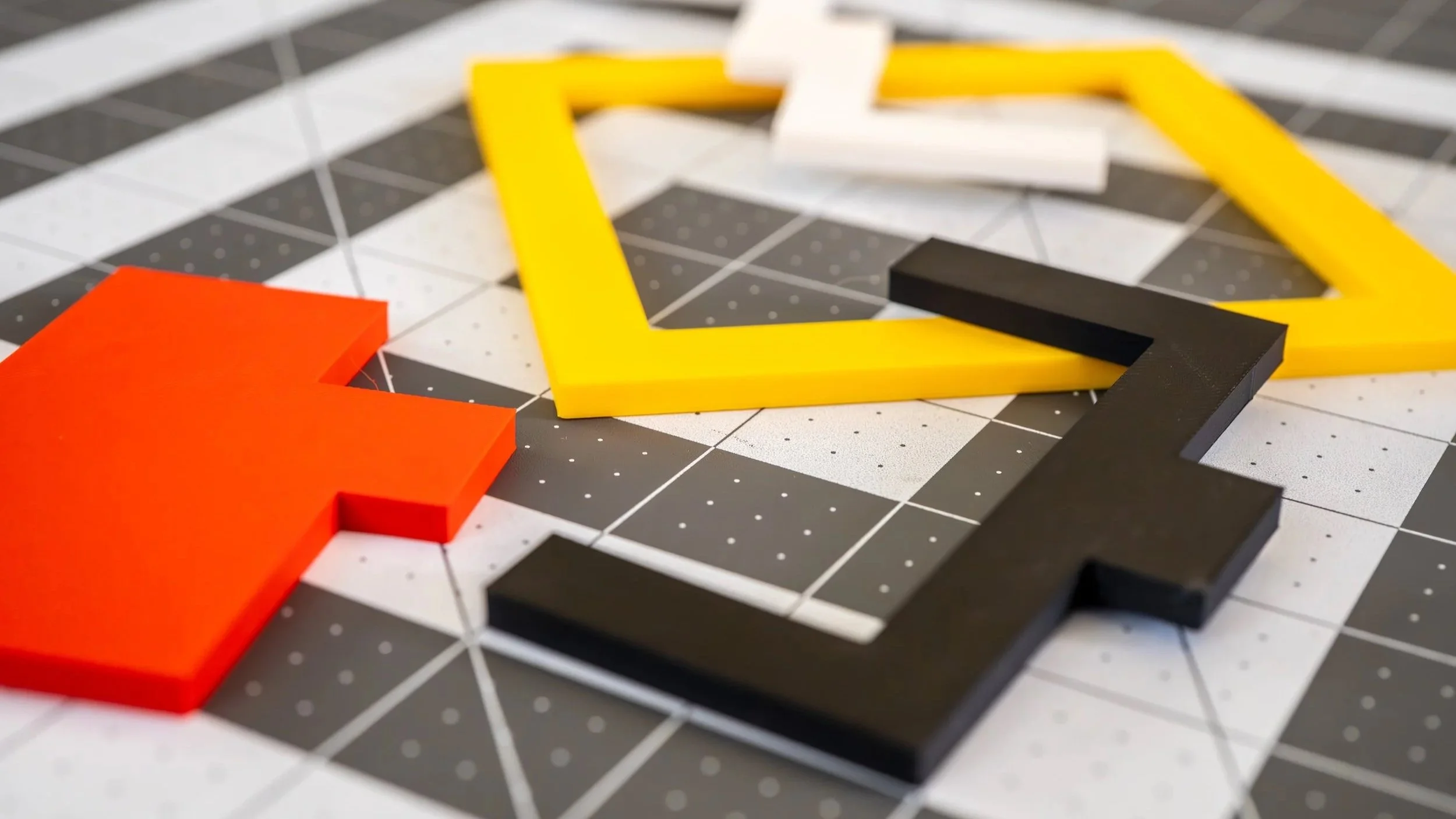
This is by far our favorite of the options. The initial prototype for this was a cardboard stencil, but it was hard to get exact edges when cutting the stencil with scissors. We got some inspiration from our acrylic sewing rulers and thought what if we 3D printed a stencil for this exact pattern.
Overall: the stencils sped up the tracing process and created precise patterns each time.
Pros:
The square stencil helps you align the pattern within your 4 inch parameter.
The square & pattern stencils work well together, keeping your pattern exact each time you repeat it.
Speeds up the application process, reducing the amount of time needed by ~35% compared to the by-hand method of ruler + chalk only.
You can use this method on any material type, just change out the writing utensil (chalk or marker) based on your material.
Cons:
You still need to draw the initial 4 inch square grid with your ruler first
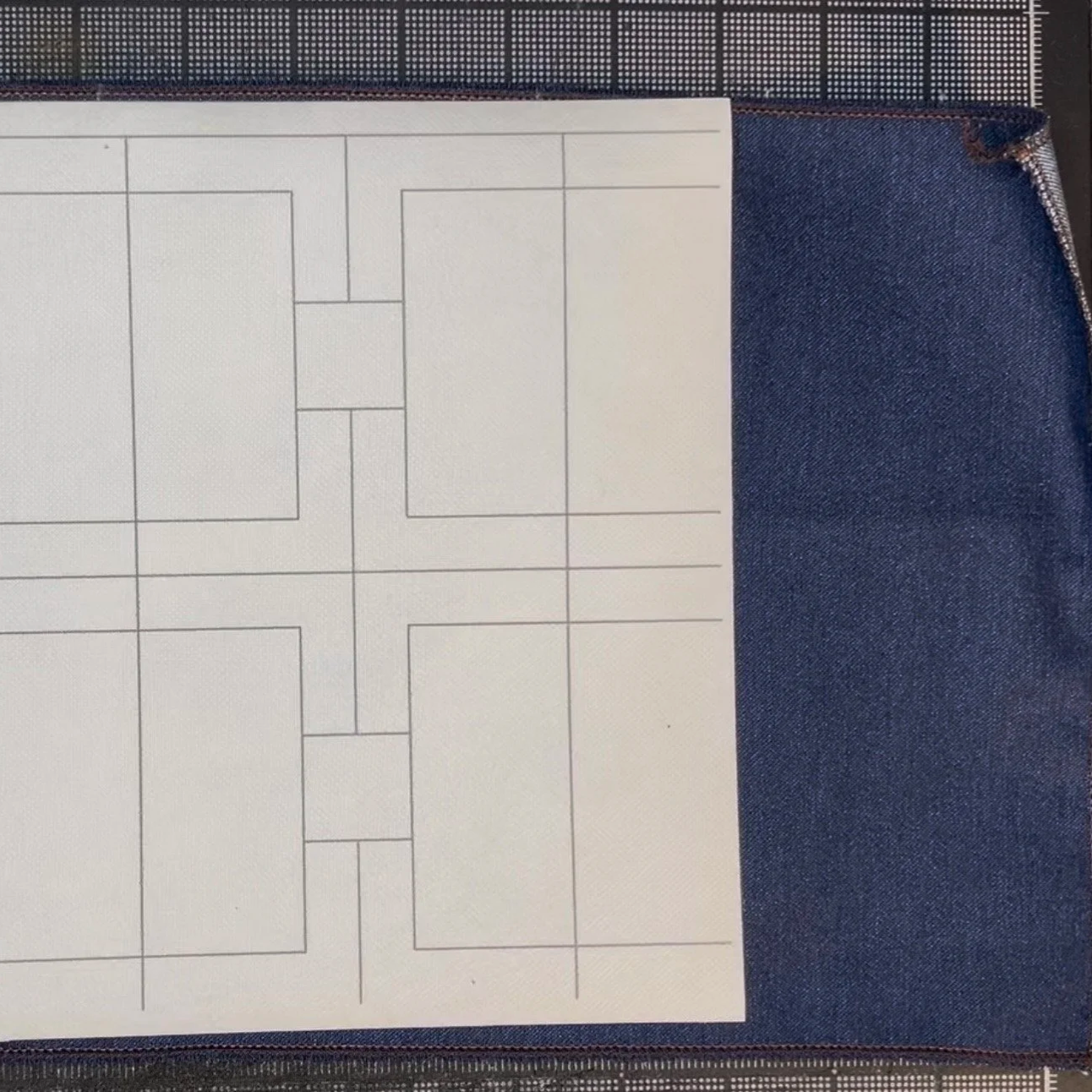
Using the New Brothread, “Sticky Water Soluble Paper Stabilizer,” we took the PDF of our quilting pattern and printed it directly onto the stabilizer. We were able to stick the stabilizer down directly on the material, sew over it, and then rinse it off in water.
Overall: The stabilizer sped up the quilting process, making it easy to follow the lines across the whole piece of fabric. However, due to the limitations + extremely sticky back, we’d use this method for small designs or embroidery.
Pros:
Easy to print on, easy to sew on.
The stabilizer washes off easily in some cool water.
Application & sewing time was sped up, reducing at least 50% from the by-hand method of ruler + chalk only.
Cons:
There are limitations - size you can print out (8x10” for standard printer) along with the material choice needs to be fabric you’re sure can go in water.
The sticky side of the stabilizer is really sticky. It was hard to get on the material in a straight line w/out bunching up the material or the stabilizer.
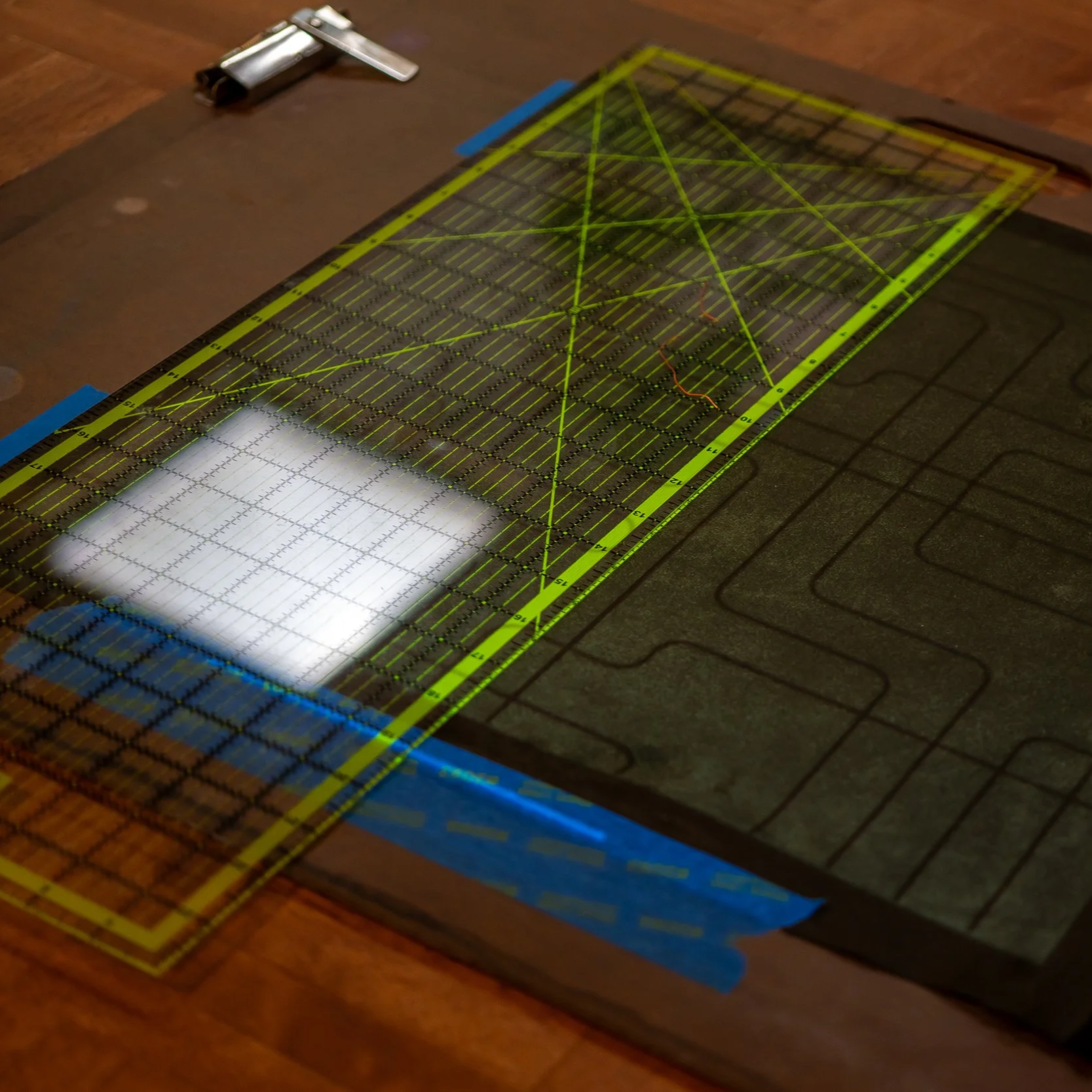
Using the PDF of your quilting pattern, you can set up a home projector to display that pattern onto material, using a ruler to get the straight lines where needed.
Overall: Personally, this is our least favorite method for getting quilting patterns onto material because of the amount of space you need to have height wise and the set up time.
NOTE: With a projector meant for sewing (like the Singer Ditto Pattern Projector), this could be a much easier, pain free process. If you have one of these, drop us a note on how it improves this process.
Pros:
No pre-made grid is necessary to apply first
Cons:
Lots of prep time - like taping down our material to keep it from buckling or moving, getting the height of projector right for pattern size, etc.
Still need a ruler to get straight lines
Based on our experience, this method didn’t cut down on our application time
In conclusion, the great thing about anyone of these solutions is the fact that they can be used by beginners to experts alike. We were most satisfied with the 3D printed stencils based on the material we were using for our project. It sped up the pattern application process while letting us use any type of fabric we wanted. We’ve got some ideas to use these small, yet might quilting stencils on.